The Science of Procrastination: Why We Delay and What Research Says
That sinking feeling is familiar: a deadline approaches, yet somehow you’re reorganizing your desk, checking your phone, or cleaning something that “suddenly” became urgent. Why do we do this to ourselves? For decades, psychologists assumed procrastination was a time-management failure or a character flaw. The research tells a very different story.
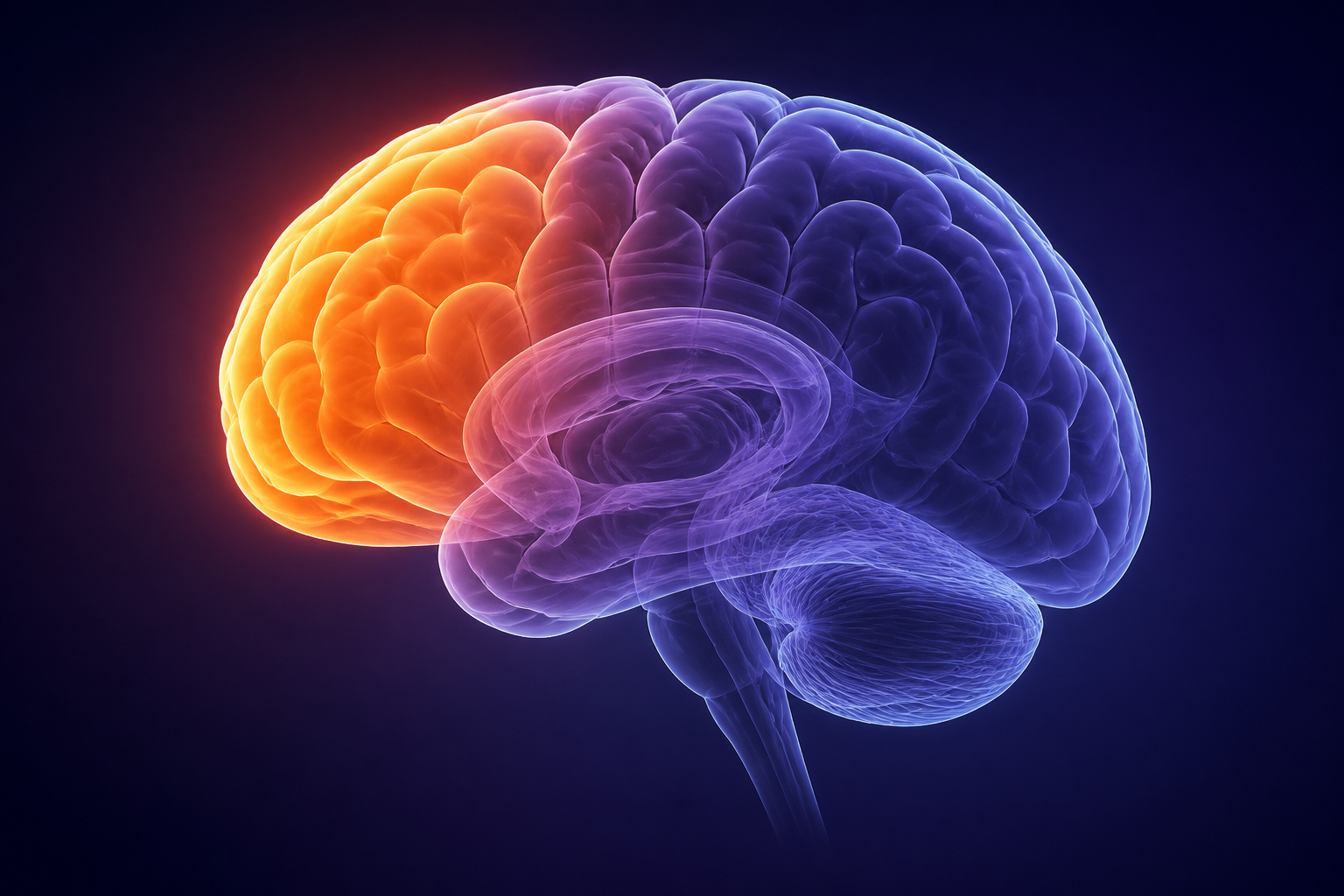
Quick answer: Procrastination is not laziness and not a time-management problem. According to the American Psychological Association, researchers now define it as a failure of self-regulation — specifically, an emotion-regulation problem in which we avoid tasks to escape uncomfortable feelings. Around 80% to 95% of college students report procrastinating, and neuroscience shows the struggle plays out between two brain systems: the prefrontal cortex (self-control) and the limbic system (emotion and reward).
What Is Procrastination, Really?
In the scientific literature, procrastination is defined as “a prevalent and pernicious form of self-regulatory failure” — voluntarily delaying an intended course of action despite knowing you’ll be worse off for it.
Three features separate true procrastination from ordinary delay:
- It is voluntary. You choose to delay; circumstances aren’t forcing you.
- It is irrational. You know the delay will hurt you later.
- It is unnecessary. The delay isn’t strategic — it just feels better in the moment.
That last point is the key. Fuschia Sirois, PhD, a leading procrastination researcher, argues that people who procrastinate are not avoiding work — they are avoiding the negative emotions the work triggers: boredom, anxiety, self-doubt, frustration, or feeling overwhelmed. Procrastination is a short-term mood-management strategy that backfires over time.
How Common Is Procrastination?
It is far more common than most people assume. In the landmark 2007 meta-analysis published in Psychological Bulletin — a statistical review of hundreds of studies by University of Calgary psychologist Piers Steel, PhD — researchers found that 80% to 95% of college students procrastinate, and up to 20% of adults report procrastinating to a degree that significantly disrupts their lives.
Chronic procrastination is different from the occasional “I’ll do it tomorrow.” Research links habitual procrastination to higher stress, anxiety, depression, and even poorer physical health — which makes understanding the mechanism more urgent than simply telling people to “try harder.”
Why We Procrastinate: It’s About Emotions, Not Laziness
The classic view was that procrastinators are lazy or disorganized. Decades of research reject that framing:
- Emotion regulation comes first. Sirois and Pychyl’s work shows procrastination is driven by a “priority of short-term mood regulation” — we choose immediate relief from a task’s unpleasant feelings over our long-term goals.
- It’s a coping mechanism. When a task triggers anxiety or self-doubt, delaying provides instant (if temporary) relief. The relief reinforces the behavior, creating a cycle.
- Willpower isn’t the missing ingredient. People who procrastinate often work very hard on other things — they are not idle. They simply reallocate effort to tasks that feel less threatening.
This reframing matters because it explains why generic advice like “just start” or “manage your calendar better” fails for chronic procrastinators: it treats a mood problem as a planning problem.

What Happens in the Brain When You Procrastinate
Neuroscience is beginning to map the exact circuits involved. Two brain systems are consistently implicated:
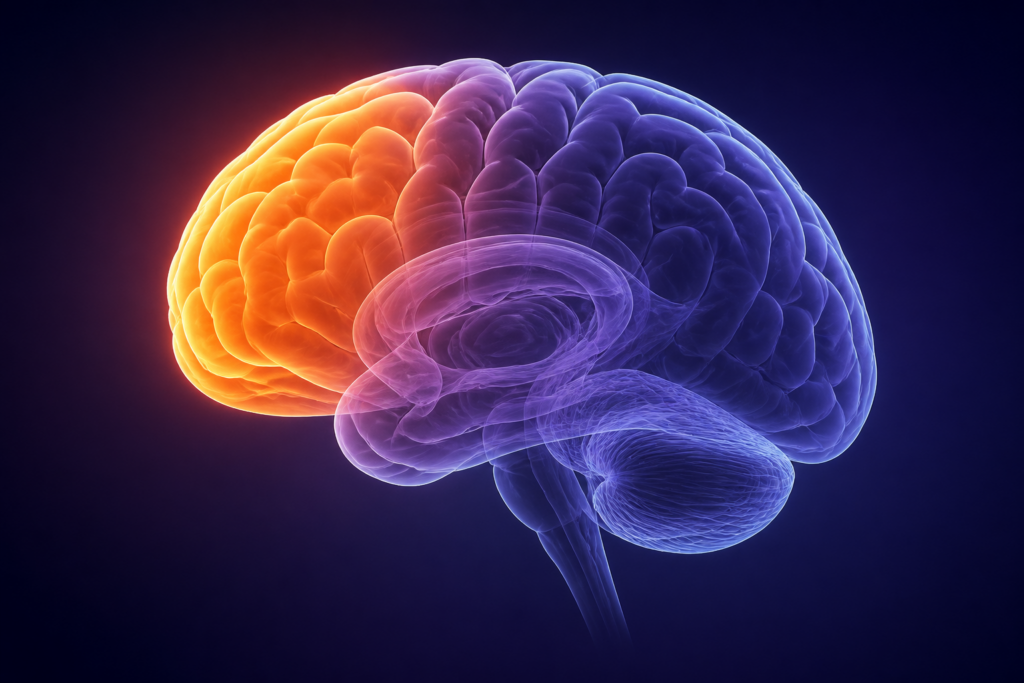
The prefrontal cortex (self-control). This region — located just behind the forehead — is responsible for planning, goal pursuit, and resisting temptation. Neuroimaging research published in Scientific Reports found that procrastination is linked to the operations of the prefrontal cortex and the limbic system. Individuals who procrastinate more tend to show weaker functional control from prefrontal regions over emotionally reactive areas.
The limbic system (emotion and reward). This older, faster network generates emotional responses and seeks immediate reward. A 2022 neuro-computational study published in Nature Communications found that the key marker of procrastination is how sharply the brain discounts future effort: the expected effort cost of a task — signaled by the dorsomedial prefrontal cortex — is attenuated by delay, so doing a task “later” genuinely feels less effortful than doing it “now.” In effect, our brains treat tomorrow-you as a stronger worker than today-you.
In practical terms: when you face a boring report or a difficult conversation, your limbic system signals “uncomfortable,” and your prefrontal cortex — the system that would push you forward — loses the tug-of-war, especially under stress or fatigue. Procrastination is not a moral failing; it’s a neural contest you can learn to rig in your favor.
The Hidden Costs of Chronic Procrastination
The costs go far beyond missed deadlines:
- Stress and anxiety. Research on procrastination and emotion regulation shows the short-term relief is followed by a predictable spike in stress, guilt, and anxiety as the deadline approaches.
- Physical health. Longitudinal work by Sirois links chronic procrastination to poorer health outcomes — higher stress-related illness risk, poorer sleep, and delayed health-seeking behavior.
- Performance and relationships. Academic studies consistently show procrastinators earn lower grades and report more conflict around shared responsibilities.
- Self-esteem erosion. Every cycle of delay-and-panic quietly reinforces the belief “I can’t trust myself to follow through.”
Understanding these costs matters because awareness is a prerequisite for change — and because guilt, the emotion people usually reach for, is exactly the kind of negative feeling that fuels further avoidance.
What Research Says Actually Helps
The evidence-based strategies below come from the same literature that explains the problem:
- Forgive yourself first. Studies of self-compassion and procrastination find that self-forgiveness after a procrastination episode reduces the likelihood of repeating it. Guilt is fuel for avoidance; self-compassion is a circuit-breaker.
- Regulate the emotion, not just the task. Because procrastination is driven by feelings, label the feeling (“I’m avoiding this because it feels overwhelming”), then shrink the task until it no longer triggers it — e.g., “open the document and write one paragraph.”
- Use implementation intentions (“if-then” planning). Decades of research show that specifying when, where, and how you’ll act — “If it’s 9:00 AM on Monday, I will work on the proposal at my desk for 25 minutes” — sharply increases follow-through by handing the decision to the situation rather than your mood.
- Chunk and time-box. Breaking a project into small, defined steps and working in short, timed bursts reduces the emotional weight of “the whole thing” and exploits the brain’s preference for completing small units.
- Redesign your environment. Since self-control is a limited resource, make the tempting path harder and the task path easier: phone in another room, tabs closed, supplies ready.
- Distinguish strategic delay from procrastination. As the APA notes, not all delay is harmful — intentional delay (scheduling something for later on purpose, to plan or to rest) is different from procrastination (avoiding it because it feels bad). Schedule breaks deliberately, and they stop being escapes.
Frequently Asked Questions
Is procrastination a sign of laziness? No. Research shows procrastination is a self-regulation failure driven by emotion avoidance, not a lack of motivation or work ethic. Chronic procrastinators are often very busy — just not on the task that matters.
What percentage of people procrastinate? According to Piers Steel’s 2007 meta-analysis in Psychological Bulletin, 80% to 95% of college students procrastinate, and about 15% to 20% of adults report chronic, life-disrupting procrastination.
Is procrastination a mental health condition? It is not an official clinical diagnosis, but chronic procrastination is strongly associated with anxiety, depression, stress, and lower well-being, and can be a symptom worth discussing with a professional.
Why do I procrastinate even on things I enjoy? Procrastination tracks aversive feelings, not inherent task quality. A task you love can still carry pressure (fear it won’t be good enough) or guilt (doing it for someone else), which triggers the same avoidance loop.
Can procrastination ever be useful? Deliberate, planned delay — such as sleeping on a decision or letting an idea incubate — is different from procrastination and can be productive. The APA distinguishes “intentional delay” from avoidance-based procrastination.
Does procrastination affect physical health? Yes. Research by Fuschia Sirois links chronic procrastination to higher stress, poorer sleep, and delayed health-care seeking, which over time predict worse physical health outcomes.
The Takeaway
The science of procrastination delivers one liberating conclusion: you are not lazy, broken, or undisciplined. You are a human being whose brain prioritizes short-term emotional relief over long-term goals — and that is a solvable engineering problem, not a moral one. Name the emotion, shrink the task, plan the trigger, and forgive the slip. The research says each of these small moves, repeated, is what actually moves people out of the delay loop.
Sources: American Psychological Association — Speaking of Psychology: Why we procrastinate (Fuschia Sirois, PhD); APA gradPSYCH — Procrastination or ‘intentional delay’?; Steel, P. (2007). The Nature of Procrastination. Psychological Bulletin, 133(1), 65–94 — APA PsycNet; PubMed — Steel (2007) abstract; Le Bouc, R., & Pessiglione, M. (2022). A neuro-computational account of procrastination behavior. Nature Communications (PMC); Identifying the Neural Substrates of Procrastination — Scientific Reports (Nature); “I’ll Worry About It Tomorrow” — Fostering Emotion Regulation (PMC); Emotion Regulation Difficulties and Academic Procrastination — Frontiers in Psychology








Leave a comment