Master Cat Litter Training with a 30-Day Step-by-Step Plan
Ever brought home a kitten and wondered if you’d ever stop scrubbing accidents off the floor? Cat litter training turns that worry into confidence, helping your feline friend learn good habits quickly and gently.
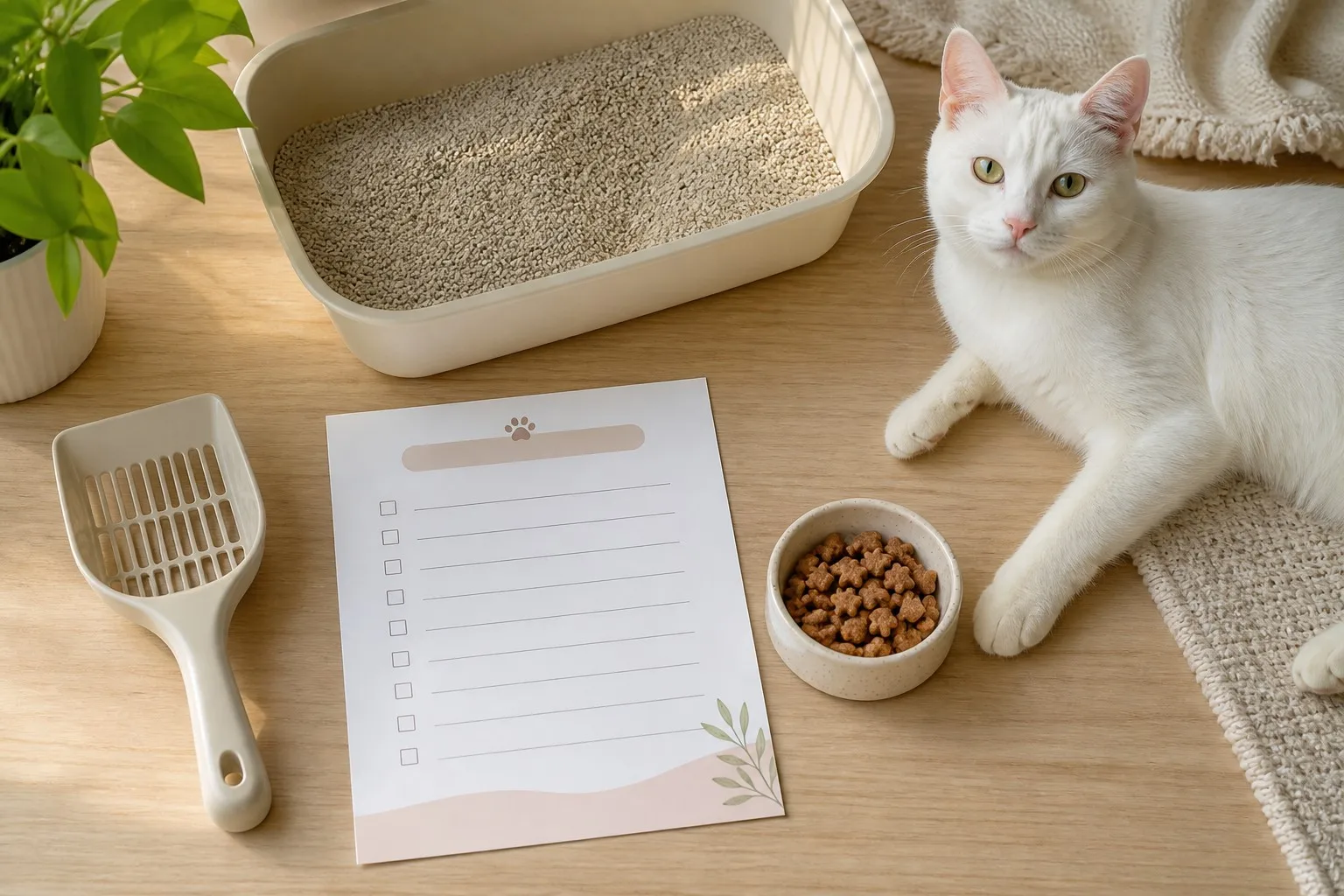
Quick answer: Most kittens learn to use the litter box within their first week or two at home, and virtually all cats — including adult rescues — can master it within 30 days when you follow a consistent routine. The three pillars are right placement, the right litter, and patience. If you want a ready-made structure, the Paws & Progress: 30 Days of Cat Litter Training Made Easy eBook turns this process into a simple, day-by-day checklist you can print and follow.
This article shares the exact step-by-step plan we recommend to new cat owners — no guesswork, no frustration, just a calm path to a litter-box-perfect home.
Why Cat Litter Training Matters
Cats are naturally fastidious creatures. According to Cornell University’s Feline Health Center, most cats will instinctively use a litter box — the challenge is usually about where and how you set it up, not the cat’s willingness. When training goes wrong, it’s almost always one of three things: the box is in a bad spot, the litter feels wrong under their paws, or the routine is inconsistent.
Proper cat litter training matters because it:
- Protects your floors and furniture from stains and odors
- Reduces stress for both you and your cat — elimination problems are one of the top reasons cats are rehomed
- Builds trust between you and your pet through calm, positive routines
- Prevents costly vet visits — as the ASPCA notes, at least 10% of all cats develop elimination problems, many of which are preventable with good setup and habits
The Benefits of a Structured Training Plan
Winging it rarely works with litter training. A structured plan delivers real results:
- Faster learning. Clear, repeatable steps help kittens connect the box with the behavior in days, not weeks.
- Fewer accidents. Knowing exactly when to guide your cat to the box (after meals, naps, and play) cuts accidents dramatically.
- Less stress for everyone. The Paws & Progress plan breaks training into manageable daily actions, so you always know what to do next.
- A cleaner home. Consistent scooping habits become second nature — for you and your cat.
How to Litter Train a Cat: Your 30-Day Step-by-Step Plan
The plan below follows the structure of the Paws & Progress 30-day training plan — you can print its daily checklist to track your progress.
Days 1–7: Set Up for Success
Choose the right box. Most cats prefer simple, open boxes over covered ones. The box should be at least one and a half times the length of your cat, so they can turn around comfortably. The ASPCA recommends providing one to two inches of litter (not three to four), as most cats prefer a shallower depth.
Pick a cat-friendly litter. Unscented, clumping clay litter is the most widely accepted option. Strong scents that smell “clean” to humans can repel cats — keep it simple.
Place it wisely. Put the box in a quiet, accessible location — away from loud appliances, foot traffic, and the food and water bowls. The ASPCA recommends one box per floor in multi-level homes.
Days 8–14: Build the Routine
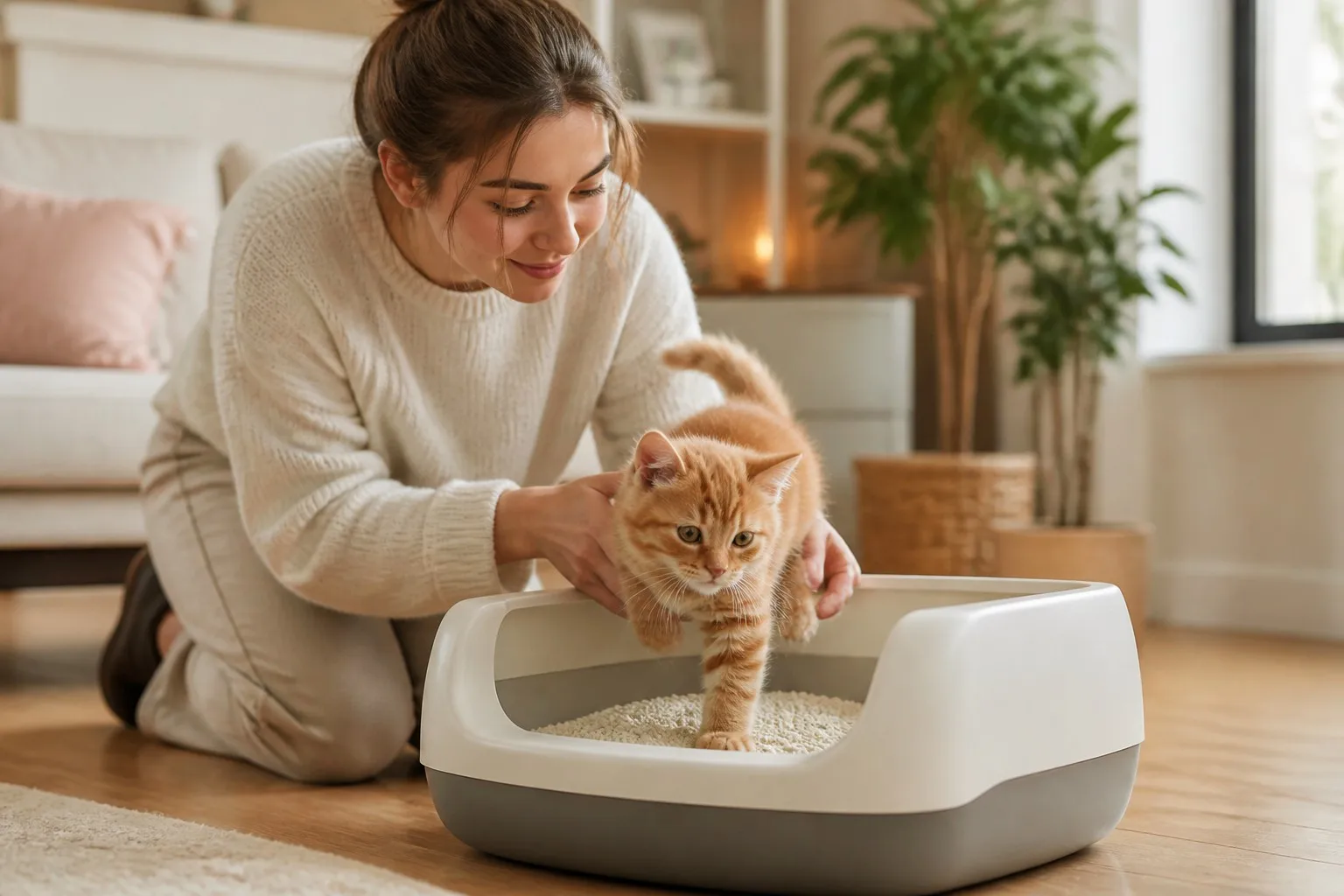
Guide, don’t chase. After meals, naps, and play sessions, gently place your cat in the box. Scratch lightly at the litter with your finger — many kittens will imitate the digging motion.
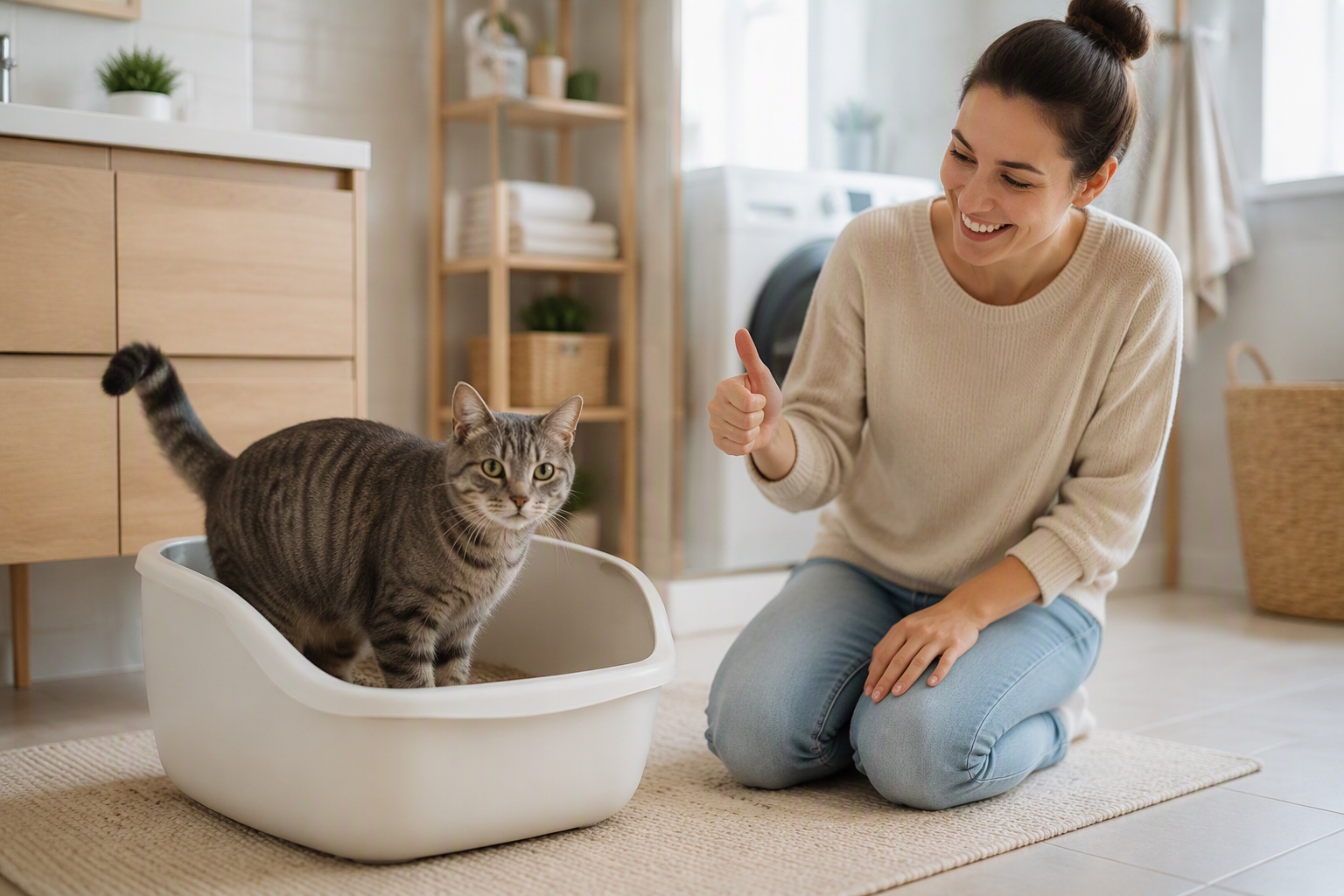
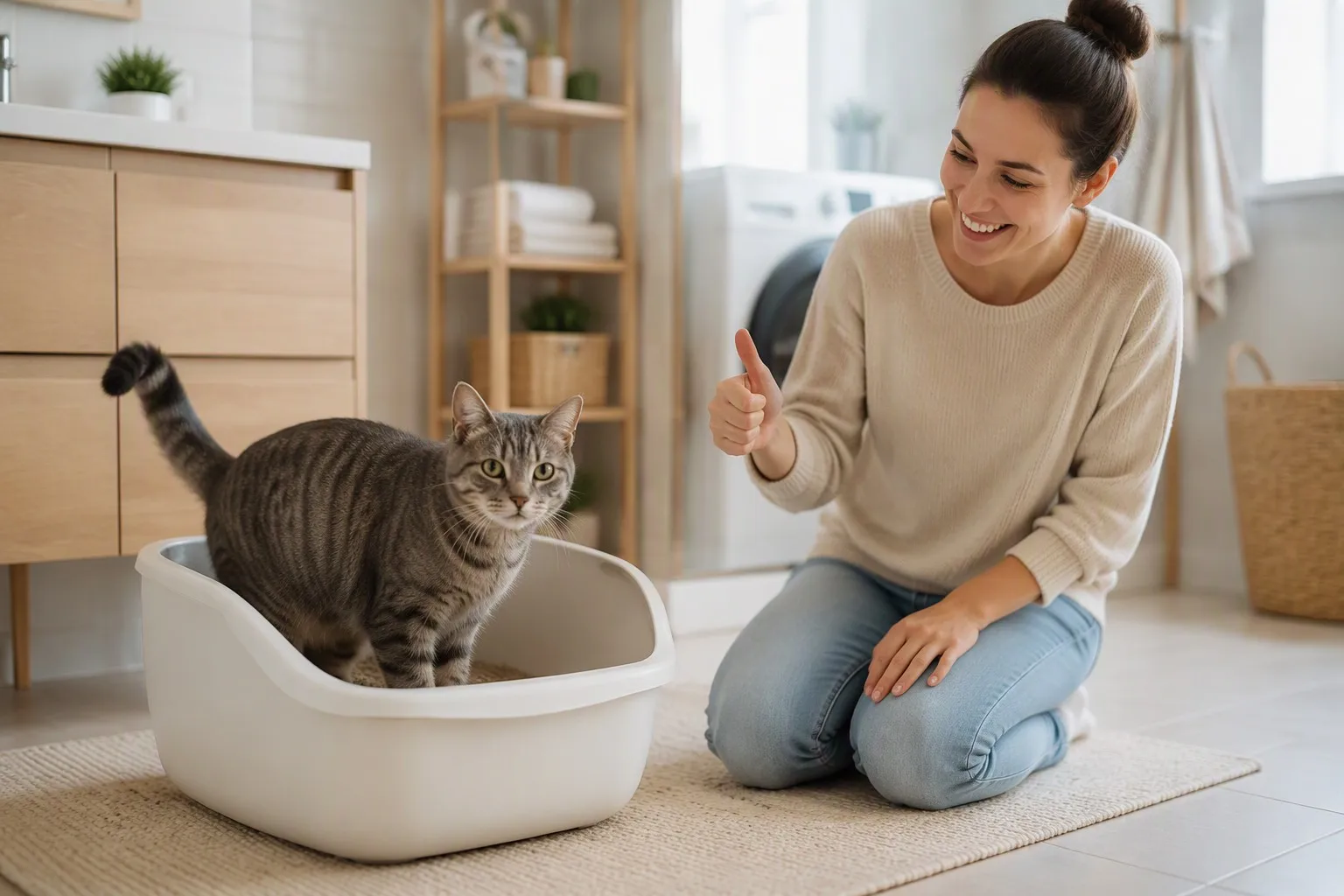
Reward every success. The moment your cat uses the box, offer a treat and calm praise. Positive reinforcement works far better than punishment, which creates anxiety and avoidance.
Scoop daily. Keep the box clean — a dirty box is the number one reason cats start avoiding it. The VCA Animal Hospitals advise scooping at least once a day, with a full litter change and wash weekly.
Days 15–30: Reinforce and Prevent Relapses
Watch for avoidance signals. If your cat sniffs and circles outside the box, they may dislike the litter type, the location, or the cleanliness level. Adjust one variable at a time.
Keep the routine consistent. Cats thrive on predictability. Feed at the same times, scoop at the same times, and your cat will sync their schedule to yours.
Add boxes as your household grows. The VCA rule of thumb: one litter box per cat, plus one extra. Two cats need at least three boxes — and keep boxes away from feeding stations, ideally in a separate room.
Common Litter Box Problems and How to Fix Them
| Problem | Likely cause | Quick fix |
|---|---|---|
| Cat avoids the box entirely | Unpleasant litter scent or texture | Switch to unscented clumping litter; keep depth at 1–2 inches |
| Accidents near (but not in) the box | Box too small or in a busy spot | Try an open, larger box in a quieter location |
| Urinating outside the box | Stress, territory, or medical issue | Add another box; if it persists beyond a week, see a vet — Cornell notes house-soiling can have medical causes |
| Sudden change after months of success | Dirty box or new stressor | Deep-clean the box, review recent household changes |
| Kitten scatters litter everywhere | Too-deep litter or high-sided panic | Reduce depth; use a low-entry box during the learning phase |
What to Do When Your Cat Refuses the Litter Box
If your cat suddenly stops using the box, rule out medical causes first. According to Cornell University’s Feline Health Center, litter box trouble can stem from medical problems, an aversion to the box itself, or a preference for another surface. A vet check is the safest first step.
If the vet clears your cat, work through this checklist:
- Deep-clean the box and surrounding area with an enzyme cleaner to remove lingering odors.
- Change one thing at a time — try a different litter, a different box style, or a new location, but never all at once (you won’t know what worked).
- Add a second box in a different room.
- Reduce stressors — new pets, moving, or loud construction can all trigger avoidance. Give your cat extra playtime and quiet spaces.
Real-Life Litter Training Success Stories
Pet owners who follow a structured 30-day plan share inspiring wins. Maria, a first-time kitten owner, thought her shy rescue would never learn — by day 12, the kitten was using the box without being guided. “I stopped dreading every morning,” she says.
James, who adopted two adult cats from a shelter, solved weeks of frustration by following the one-box-per-cat-plus-one rule and moving the boxes away from the feeding area. “Within a month, not a single accident,” he reports.
These stories show how cat litter training turns messy chaos into a calm, clean home — for any cat, at any age.
Frequently Asked Questions About Cat Litter Training
How long does it take to litter train a kitten? Most kittens learn within 7–14 days when you guide them after meals, naps, and play. A full 30-day plan builds the habit so it sticks for life.
What is the best type of litter for training a kitten? Unscented, clumping clay litter is the safest starting choice. Kittens prefer fine, soft textures under their paws, and most cats prefer 1–2 inches of depth, per ASPCA guidance.
How often should I clean the litter box? Scoop at least once daily. Do a full litter change and box wash weekly with mild soap (avoid strong-smelling cleaners).
Why is my cat pooping outside the litter box? Start with a vet visit to rule out medical causes — Cornell’s Feline Health Center lists medical problems among the top reasons for house-soiling. Then check box cleanliness, litter type, location, and box count.
How many litter boxes do I need for two cats? At least three. The VCA rule is one box per cat plus one extra, placed away from feeding stations.
Should I use a covered or open litter box? Open boxes are preferred by most cats — they’re easier to enter, smell less enclosed, and let your cat see approaching threats. Covered boxes can trap odor and make nervous cats avoid them.
What should I do if my adult rescue cat won’t use the litter box? Be patient — adult cats may carry stress from past environments. Start with a clean, open box in a quiet spot, use unscented clumping litter, reward every success, and consider a vet check to rule out medical issues.
Your Path to a Stress-Free Cat Household
Ready to take control of your cat’s litter habits? Download the Paws & Progress: 30 Days of Cat Litter Training Made Easy — a printable, day-by-day eBook with checklists, troubleshooting charts, and training tips designed for new and experienced cat owners alike. At Finest Catch Chamber, we believe a happy home starts with confident pets.
Pair your training plan with our Hidden Dangers on the Dinner Table: Cat Safety Guide to keep your cat safe from toxic foods, and the Cat Vitamins for Purrfect Health guide to support their nutrition from day one. A calm home is also easier to keep organized — explore our tips in Declutter Your Space, Declutter Your Mind, and if training days feel stressful, our stress-relief strategies will help you stay patient and present.
Cat litter training isn’t just about a clean floor — it’s about building a trusting, stress-free relationship with your cat. Start today, and watch your home (and your cat) thrive.
Sources: ASPCA — Litter Box Problems, Cornell Feline Health Center — House Soiling, Cornell Feline Health Center — Choosing and Caring for Your New Cat, VCA Animal Hospitals — One Litter Box for Two Cats?, VCA Animal Hospitals — Inappropriate Elimination Disorders









Leave a comment